Biomechanical Chairs: Why Most Chairs Make You Slump. 3 Designs That Don’t
Why your spine hurts even in “ergonomic” chairs
Most chairs are built around your back. They add cushioning, lumbar bumps, and forced S-shapes. But spine health is driven from below — the pelvis, hips, glutes, and ribcage.
When your pelvis rotates backward, your lower spine collapses. The ribcage compresses. Hip flexors tighten. Glutes shut down. You don’t get tired because you’re weak — you get tired because the chair forces a failing shape.
The 3 chair designs that actually work with biomechanics
1. Saddle chairs
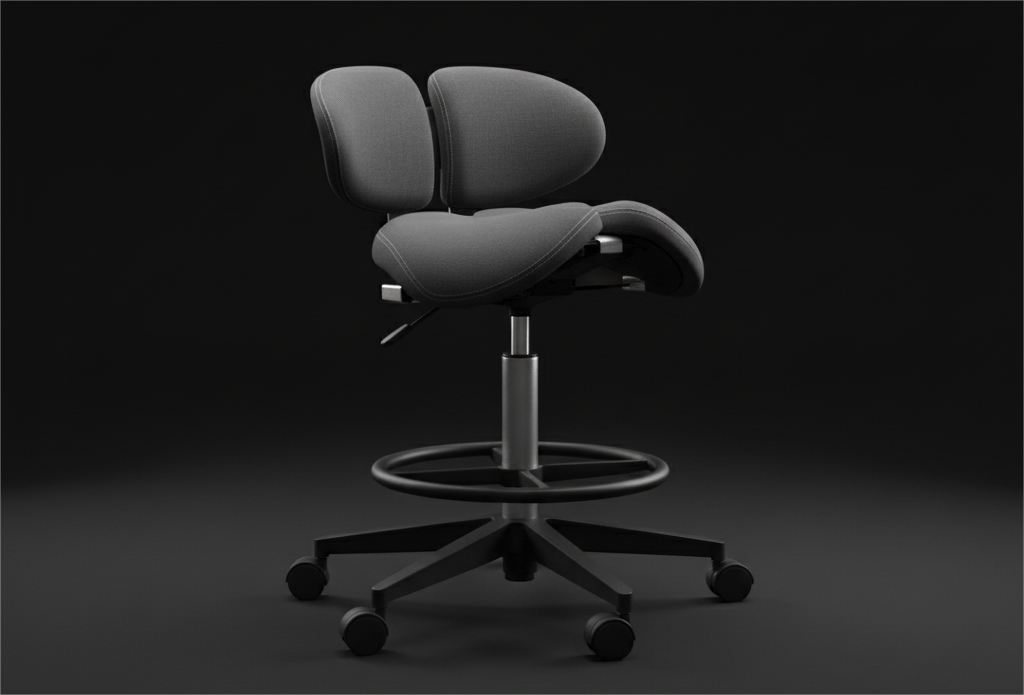
Saddle chairs open the hip angle to roughly 115–135°. Your knees drop, the pelvis tilts slightly forward, and your spine stacks itself instead of collapsing into a C-shape. Ideal for long, focused work sessions where you need your brain awake but your back calm.
2. Kneeling chairs
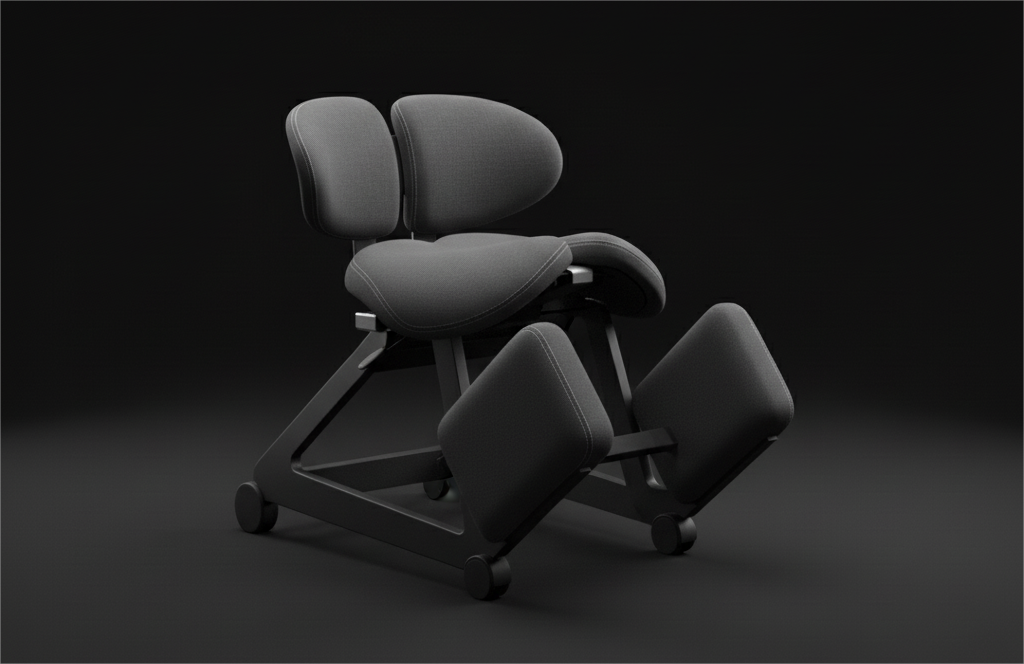
A forward-tilted seat with shin support stops you from sliding and slumping. Even when you’re tired, the design makes it hard to collapse into poor posture. Great for people whose low back collapses easily in normal chairs, or who want to retrain their sitting awareness.
3. Dynamic stools
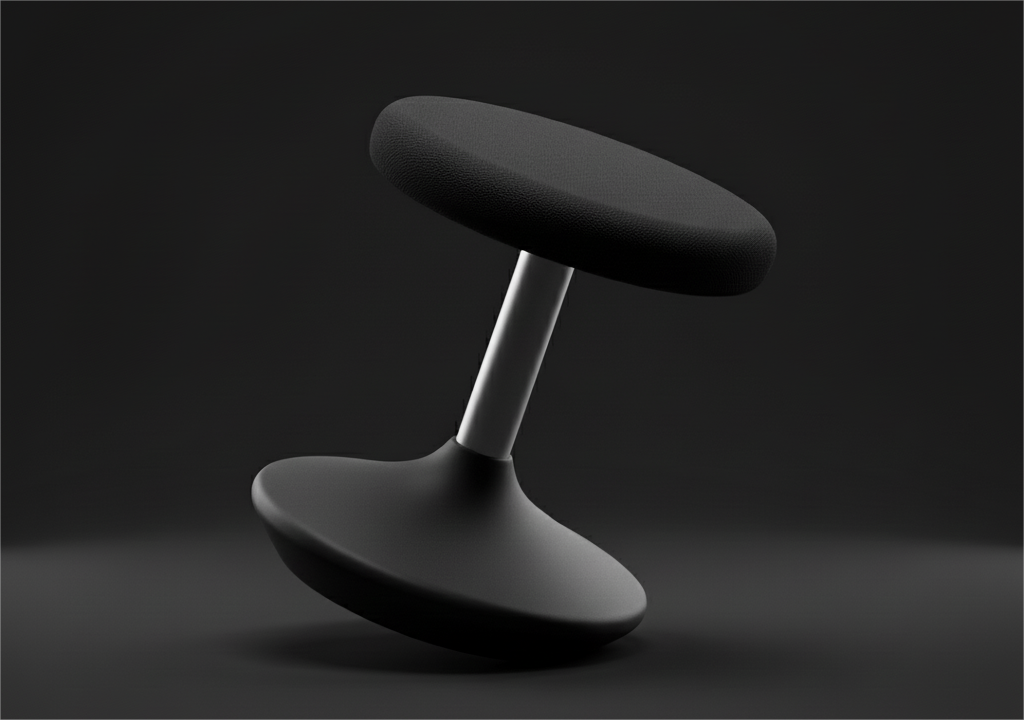
Dynamic or “active” stools keep you in a semi-standing position with controlled micro-movement. Your core stays awake, your hips don’t get trapped at 90°, and your lower back doesn’t absorb all the load. Ideal if you naturally like to move or fidget while thinking.
Chairs that quietly destroy your spine
- Gaming chairs that lock you into a rigid 90° hip angle
- Soft memory foams that feel nice but let you collapse
- Deep seat pans that trap your thighs and block hip rotation
- Hard plastic “S-curve” lumbar bumps that force your back
These designs don’t fix posture. They simply hide the discomfort until your tissues are too tired to resist. The pain shows up later — labelled as “mystery back pain” or “I’m just getting older”.
How to choose without guessing
If you sit for long hours: start with a saddle chair.
If your lower back collapses easily: try a kneeling chair for 30–90 minute blocks.
If you hate stillness or pace constantly: use a dynamic stool at a slightly higher desk height.
How to adapt safely
- Don’t jump from 0 to 8 hours in a new chair.
- Use 40–90 minute blocks, then stand or walk.
- Expect some hip and glute soreness at first — that’s muscles waking up.
- Allow 2–4 weeks for your body to fully adapt.
Want to see concrete chair specifications?
If you’re ready to learn more about what fits your body type and what may reduce the tendency to slump or feel compressed when you sit. I’ve put a short and specific detailed page to help.
Click for more detailsContact me
Ask about posture, chair selection, or transitioning safely — I’ll reply when I can.
Affiliate disclosure
Some of the links on this page may be affiliate links. If you choose to buy a chair or related equipment through those links, I may earn a small commission at no extra cost to you. I only recommend products that align with the biomechanical principles described on this page.